
Key Takeaways
- Prioritize a children language tablet app that moves past tapping and builds real speaking practice, because young learners make faster gains when they hear, repeat, and speak instead of just matching pictures.
- Check for audio-led lessons, short game-based activities, and printable follow-up work before you download, since the best language apps for ages 2–8 need to fit short attention spans and home routines.
- Compare progress tracking—not just flashy design—when choosing a children language tablet app, especially if you’re homeschooling or teaching a small group and need proof that learning is sticking.
- Protect screen time by choosing ad-free language learning apps with clear privacy rules and age-appropriate content, because safety matters just as much as english, spanish, french, german, or chinese practice.
- Look past “free” labels and test whether the app supports speaking, independent use, and repeat practice on Android or iPad, since free flashcards alone rarely keep children learning past the first week.
- Match the app to your routine by looking for multi-learner profiles, songs, stories, and weekly review tools, which makes a children language tablet app far more useful for bilingual homes and early-years classrooms.
Kids have spent years tapping cartoon apples and matching colors on a screen, yet plenty still won’t say a single new word out loud. That’s why the children language tablet app category is changing fast. Families aren’t just looking for cute screens anymore—they want signs of real language learning, real speaking, and real progress they can track after a week or two, not six months later.
Pressure is coming from every side. Homeschool parents want tablet time to earn its place in the day. Early-years educators need apps that work for pre-readers, short attention spans, and shared devices. And app stores are crowded with everything from Duolingo and flashcards to Anki-style repetition tools that weren’t built for ages 2–8 in the first place. The honest answer is that younger children don’t need more tapping. They need audio-led practice, short wins, and chances to speak—again and again—without an adult translating every step. That shift matters now, because the gap between “busy app” and “useful app” is getting harder to ignore.
Why the children language tablet app market is changing right now
Think of this like a quick coffee chat: the children language tablet app market is changing because families don’t want another app that just teaches kids to tap bright icons and collect stars. They want kids to speak, hear real language, and show what they’ve learned. That’s a different bar—and app stores are reflecting it.
The shift from passive tapping games to active speaking practice
For years, kids apps leaned on flashcards, repetition, and simple matching. Fine for exposure. Not enough for speaking. Parents comparing english, spanish, french, german, chinese, or even japanese apps now look for voice-led practice, not just a free download with baby-level tapping.
What works better right now?
- Short speaking turns instead of endless tapping
- Audio-first lessons for pre-readers
- Game loops that feel playful—but still teach
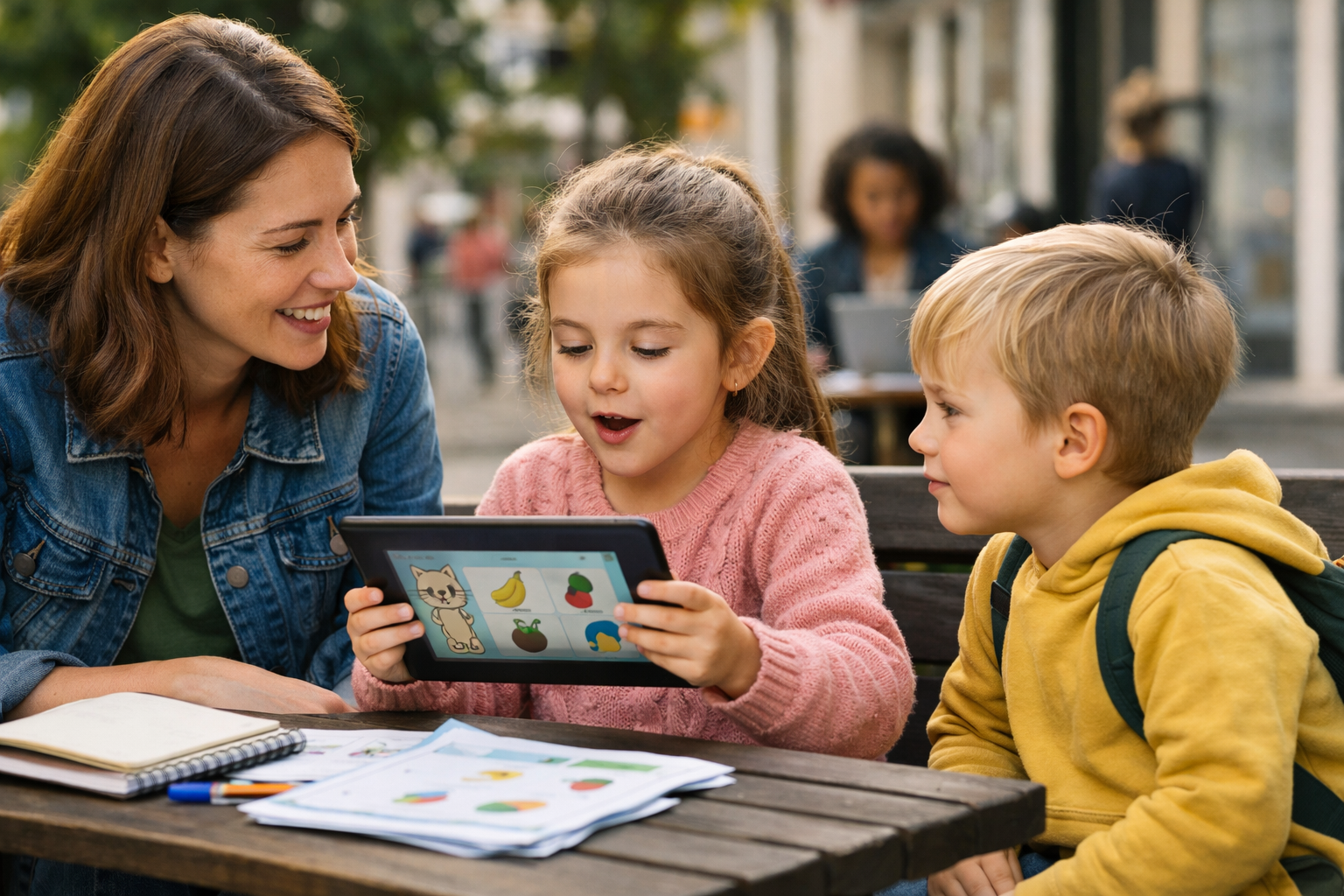
That shift explains the rise of language learning games for preschoolers on ipad that ask children to talk back, not just sign in and swipe.
And that’s where most mistakes happen.
Why families and early-years educators want tablet language learning to show real progress
Progress matters. Homeschooling families and early-years teachers need to know whether a child can recognize, speak, and reuse words after 10 or 15 minutes of practice. A children language learning app with progress reports gives that visibility, while a language app for kids with printable worksheets helps move tablet work offline.
And in shared-device homes, a kids language app with multiple profiles (siblings) stops one child’s work from overwriting another’s. Small feature. Huge difference.
How app store trends are pushing language apps beyond simple flashcards
Store listings now reward depth—ratings, reviews, privacy notes, speaking features, and real retention. That’s why the best apps are moving past old duolingo-style comparisons and basic anki flashcards toward guided speaking, spaced practice, and clearer learning paths. In practice, that’s where this market is headed.
What makes a children language tablet app worth downloading for ages 2–8
What actually makes a children language tablet app worth the download for a 3-year-old or a first grader? The honest answer is simple: it has to teach language without asking young children to sit still, read menus, or tap through fluff.
Audio-led design that lets pre-readers learn without reading instructions
For ages 2–8, audio-led design works better.
A child can hear english, spanish, french, german, or chinese, then speak and practice right away—without waiting for an adult to read prompts. That’s why parents looking for language learning games for preschoolers on ipad should check whether the app teaches through sound, repetition, and speaking instead of text-heavy lessons or flashcards built for older foreigners.
Short game-based lessons that hold attention better than long online lessons
Short beats long. In practice, 5-minute apps sessions with speaking, talk-back prompts, — quick wins hold attention far better than a 20-minute online lesson, even if a free app like Duolingo or tools such as Anki, Genki, or Headway work for older learners. The best format usually includes:
- 1–3 minute activities
- clear sign of progress
- speaking practice built into play
Printable practice, songs, and stories that turn app time into a full language routine
But here’s what most people miss: the app shouldn’t stop at the screen. A strong language app for kids with printable worksheets, songs, and stories gives families a routine they can repeat after download day. For homes with more than one child, a kids language app with multiple profiles (siblings) keeps each learner’s spanish or japanese practice separate, and a children language learning app with progress reports helps adults spot what the child can already speak—and what still needs practice.
How to choose the best children language tablet app for speaking, safety, and structure
A parent downloads two apps on a tablet. One keeps a four-year-old tapping flashcards for six minutes; the other gets that same child to speak, repeat, and stay with the lesson for 15. That gap is what separates a toy from a useful children language tablet app.
For homeschooling families and early-years teachers, the best choice isn’t just about free access, premium pricing, or whether an app works on Android and iPad. It’s about spoken practice, clear structure, and whether a child can learn without constant adult rescue.
Why speaking feedback matters more than another set of vocabulary apps
Too many language apps still act like digital flashcards. Kids tap, match, sign in, collect stars—and never really speak.
A stronger option uses listening and speaking in short rounds, with feedback built into the activity. That’s why parents searching for language learning games for preschoolers on ipad should check whether the child hears native audio, repeats words in english, spanish, french, german, or chinese, and gets corrected in real time.
What to check for on Android and iPad before you sign up or download
Start with three checks:
- Device fit: runs well on Android and iPad
- Lesson design: short practice blocks, not endless menus
- Family use: separate tracks for each child
A good kids language app with multiple profiles (siblings) prevents mixed progress, which matters fast in shared-device homes.
Most guides gloss over this. Don’t.
Ad-free design, privacy, and age fit: the non-negotiables for young learners
Non-negotiable. An app for a baby, preschool, or K-2 learner should be ad-free, age-fit, and simple enough to teach through play—not noise.
Families comparing a language app for kids with printable worksheets should also look for offline practice, teacher-friendly review pages, and a children language learning app with progress reports. In practice, that structure works better than random online apps, even popular names like Duolingo, Anki, or Genki-inspired tools built for older foreigners.
Which children language tablet app features match real home and classroom routines
Routine matters.
Without it, even the best children language tablet app turns into random tapping. The better shift is simple: match app features to the way children actually learn at home, in centers, and during weekly review.
For homeschool families: progress tracking, independent practice, and weekly review
For home use, a children language tablet app needs three things: clear progress, short independent lessons, and easy review. A children language learning app with progress reports helps parents see whether a child is learning english, spanish, french, german, or chinese words—or just replaying the same language games.
- 10- to 15-minute practice blocks
- Weekly review with songs, flashcards, or speaking checks
- Printable follow-up after screen time
That’s why a language app for kids with printable worksheets works better for ages 2–8; it turns online practice into table work fast.
For early-years teachers: multi-learner setup, repeatable centers, and printable extension work
Classroom reality is blunt. Teachers need a children language tablet app that can handle rotation. A kids language app with multiple profiles (siblings) also fits school groups because progress doesn’t get mixed when four children share one android tablet or iPad during centers.
Think about what that means for your situation.
In practice, repeatable routines win—listen, tap, speak, then extend with drawing or handwriting. That structure sticks.
For bilingual and beginner households: support for English, Spanish, French, German, and Chinese
Choice matters too. Families starting with baby vocabulary and beginners building speaking confidence need one tool that can teach and let children speak without reading long instructions (that part gets missed). A strong fit is language learning games for preschoolers on ipad that cover english, spanish, french, german, and chinese in playful practice.
Not duolingo. Not anki, genki, headway, redtail, myjpj, pubs, sizzling, shadowing, or premium apps built for foreigners. For this age group, simple talk-and-repeat practice is the best path.
The best buying mindset for a children language tablet app: look past “free” and focus on speaking outcomes
Free rarely means effective for early language learning.
- Check for speaking practice. A children language tablet app should teach kids to speak, not just tap flashcards or sign in for another streak.
- Watch week-one behavior. If a child stops after 5 to 7 days, the app probably feels like schoolwork in disguise.
- Look for parent visibility. Progress tracking matters more than a flashy download count.
Why free language apps often stall after the first week
Free apps often hook families with english, spanish, french, german, chinese, italian, or japanese word lists, then lock the better practice behind premium tiers. For ages 2–8, that model usually falls apart—young children need short wins, clear audio, and repeated speaking, not endless ads or random flashcards.
How parents compare options like Duolingo, flashcards, Anki, Genki, and speaking-first kids apps
Parents often compare Duolingo, Anki, Genki, and online flashcards with kids-first tools. But here’s what most people miss: spaced repetition can help older foreigners or adult learners doing shadowing practice, yet preschoolers usually learn better through play, songs, and guided talk. A good fit might include language learning games for preschoolers on ipad instead of headway-style drills.
A practical checklist for choosing a children language tablet app that children will actually use
Use this shortlist:
- Choose a language app for kids with printable worksheets for off-screen review.
- Pick a kids language app with multiple profiles (siblings) if one tablet is shared.That gap matters more than most realize.
- Prioritize a children language learning app with progress reports so adults can see what the child can actually say.
That approach works better—especially for families weighing free apps against tools built to teach baby and preschool learners through real speaking. Even competitors from pubs, redtail, sizzling, or myjpj lists don’t change that.
Frequently Asked Questions
What is the best children language tablet app for ages 2–8?
The best children language tablet app for ages 2–8 is one built for early learners, not older students downsized for kids. That means short lessons, clear audio, game-based learning, speaking practice, and progress tracking parents or teachers can actually read in two minutes. If an app feels like Duolingo for adults with brighter colors, it usually misses the mark.
Are children language apps safe and age-appropriate?
They can be, but not all of them are. A good children language tablet app should be ad-free, simple to use without web browsing, and designed for young children who may tap everything on the screen. Data safety matters too—especially if the app includes speaking features or requires a sign-in.
Can a tablet app really help my child learn to speak a new language?
Yes, if the app includes active speaking and listening practice rather than only matching games or flashcards. Kids learn faster when they hear words in context, repeat them out loud, and use them again across stories, songs, and play. Tapping alone won’t teach a child to speak.
Which languages should a children language tablet app offer?
The most useful apps usually cover high-demand choices like English, Spanish, French, German, Chinese, and sometimes Japanese or Italian. For families, the right choice depends on daily exposure, travel plans, heritage language goals, or school preparation. For schools and homeschool settings, sticking with one clear language path works better than jumping between apps.
Are free language apps good enough for kids?
Free apps can be fine for a trial run, but they often hit limits fast—too many ads, too little structure, or very light content after the first few sessions. For real language learning, most families need more than a free download with a few vocabulary games. The honest answer is that paid apps usually do a better job with progression, review, — speaking practice.
How is a children language tablet app different from apps like Duolingo, Anki, or Genki?
Apps like Duolingo, Anki, or even resources tied to Genki are often better suited to older learners, teens, or adults who can read instructions and handle abstract drills like spaced repetition. Young children need visual cues, songs, touch-based play, and simple speaking tasks that don’t feel like study. Different tools, different brains.
Real results depend on getting this right.
Should kids use flashcards and spaced repetition in language apps?
Yes—but only in child-friendly form.
Flashcards — spaced repetition work best when they’re hidden inside games, quick review rounds, or story-based practice rather than presented like a study deck for foreigners preparing for a test. For a five-year-old, play first, repetition second.
What should parents and teachers look for before they download a language app?
Look for five things: age fit, speaking practice, simple navigation, progress reports, — content that works in short sessions. Bonus points if the app runs on Android and iPad, lets more than one child sign in, and includes printable work for offline practice. That’s what makes a children language tablet app useful in real routines—not just fun for one afternoon.
Can a children language tablet app work for homeschool and classroom routines?
Absolutely. In practice, the best apps fit into a 10- to 15-minute block, then connect to follow-up work like printable worksheets, songs, mini talk practice, or vocabulary review. That’s a much better setup for homeschool families and early-years teachers than random online games with no path forward.
Is one app enough for complete language learning?
No. A children language tablet app should be the practice anchor, not the whole plan. Kids still need real-world listening, books, songs, conversation, and repeated chances to hear and speak the language beyond the screen—otherwise progress stalls, even with the best apps.
And that’s where most mistakes happen.
The strongest shift in early language learning isn’t about adding more screens. It’s about asking more from them. A good children language tablet app should move a child past endless tapping and into listening, repeating, and speaking with purpose—because that’s where real confidence starts. For ages 2–8, that also means design matters: audio-led instruction for pre-readers, short lessons that fit a real family rhythm, and printable follow-up work that carries the lesson off the tablet and into the rest of the week.
Just as important, families — early-years educators can’t afford to guess whether an app is working. Progress tracking, ad-free play, age-appropriate content, and a structure children can use with growing independence aren’t extras. They’re the filter. And while free options can look appealing at first glance, the better question is simpler: does the child actually begin to understand and say more after seven days, not just collect points?
The next step is practical. Shortlist three apps, test each one for a week, and compare them against one page of criteria: speaking practice, safety, pre-reader usability, printable support, and visible progress. Choose the one that earns a place in the routine—not just a spot on the home screen.
For more great reading, visit our site and explore related topics.