

If you think switching careers is brave, you’re right, until the bills come due.
About 60 to 80 percent of U.S. households live paycheck to paycheck, so losing income can blow up fast.
This guide gives one clear survival plan: figure your runway (how many months your savings will cover essentials), estimate the gap after unemployment benefits, then act: file for benefits, freeze nonessential spending, negotiate bills, and start a short-term income bridge.
Do those steps first and you’ll keep your search from becoming a financial crisis.
Immediate Financial Stabilization During a Career Switch or Unemployment

Something like 60 to 80 percent of U.S. households are living paycheck to paycheck. Lose your income and you’re in crisis mode fast.
So here’s what you do first. Take whatever emergency savings you’ve got and divide it by the bare minimum you need each month: rent, utilities, groceries, insurance, minimum debt payments. That’s your survival runway. Count it in months.
Then figure out how long you’ll actually be out of work. There’s a rough rule worth knowing: for every $25,000 you earned, expect about one month of job hunting. Made $50,000? You’re probably looking at two months before something sticks. Now apply the emergency fund math. Save one month of essential expenses for every month you expect to be unemployed. If your bills run $3,000 a month and you’re planning on a three-month search, you need $9,000 banked. Got $6,000? You’re two months covered and already behind.
Once you know your runway, estimate what you’ll get from unemployment. Quick version: take what you earned weekly, cut it in half, then cap it at whatever your state’s maximum allows. Made $1,000 a week? You’ll get around $500 weekly in benefits, which works out to about $2,167 a month. Unemployment typically replaces 30 to 60 percent of your prior income, but it really depends on where you live and what you were making. The gap between your essential monthly expenses and your unemployment check is your shortfall. That number controls everything.
With those three pieces in hand (runway, shortfall, expected benefit), you can stabilize things in five steps:
-
Write down every fixed monthly cost. Rent or mortgage, utilities, insurance, car payment, minimum debt payments, phone, groceries. Add it up. That’s your real baseline.
-
File for unemployment in the first week after you separate, even if you’re not sure you qualify. Processing can take two to four weeks, and benefits usually start from the day you file, not the day you left.
-
Stop all discretionary spending now. Dining out, subscriptions, entertainment, random shopping. Freeze it. Put that cash toward your emergency buffer instead.
-
Call your mortgage lender, your landlord, and your utility companies the second you think you might miss a payment. A lot of them have hardship plans or forbearance options, but you need to ask before you default.
-
Find one income bridge you can start within two weeks. Freelance work, part-time shifts, gig tasks, temp jobs. Anything that closes the gap between your unemployment check and what you actually need to live.
Building a Transition Budget for Career Changes and Unemployment
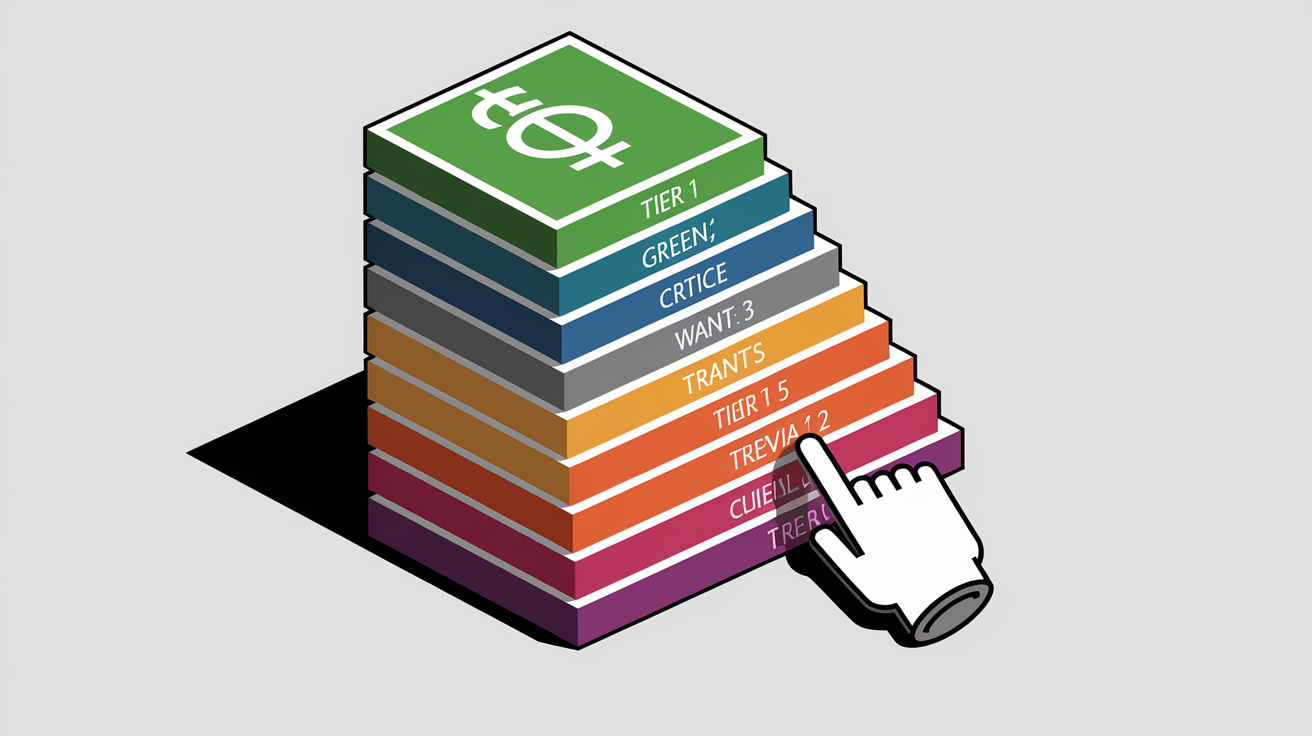
A transition budget sorts your monthly spending into five tiers, then cuts from the bottom up until what you’re spending matches what you’ve got coming in. Think of it as a survival ranking system. The stuff closest to keeping you alive stays funded. Everything else gets paused or dropped in strict reverse order.
Here’s how the five tiers work and what goes in each:
Tier 1: Survival Needs. Housing (rent or mortgage), utilities (electric, gas, water), groceries, healthcare premiums and prescriptions. This is the stuff that keeps you alive and sheltered. You never cut it. If you can’t pay in full, you negotiate payment plans or look for assistance.
Tier 2: Critical Wants. Transportation (car payment, gas, public transit), childcare, internet and phone, minimum payments on all debts. You need these to hunt for work, take care of dependents, and avoid legal or credit damage. Protect them second. But you can downgrade services or defer payments if providers offer hardship agreements.
Tier 3: Lifestyle Choices. Dining out, gym memberships, subscriptions (streaming, gaming, cloud storage, meal kits), other recurring services that make life nicer but aren’t critical. These are the first things you pause or cancel when money gets tight.
Tier 4: Trivial Expenses. Impulse buys, vending-machine snacks, coffee-shop runs, new clothes or gadgets you don’t strictly need. Cut this tier completely during unemployment or a career switch.
Tier 5: Future Dreams and Goals. Emergency savings contributions, retirement accounts, vacation funds, gift budgets. Stop funding these entirely until you’ve got stable income again. Your job right now is to deploy existing savings, not build new ones.
When you lose income, eliminate Tier 5 first. Then Tier 4. Then pause or downgrade Tier 3 items one by one. Still short? Contact Tier 2 providers (your lender, your internet company, your childcare center) to reduce or defer payments. Only as a last resort do you seek public or nonprofit help to fund Tier 1 survival needs.
Most states provide around six months of unemployment benefits, though some offer less than three and others extend during economic crises. Keep in mind that unemployment income is taxable. You’ll get a 1099-G at year end, and you can choose to withhold up to 10 percent from each check if you don’t want a surprise tax bill later.
Final Words
Calculate your survival runway now: divide emergency savings by essential monthly costs and use the job-search rule of thumb to size your target.
Triage fast: list essentials, estimate unemployment benefits, find the shortfall, cut obvious nonessentials, and protect housing and utilities.
Then rebuild a transition budget with the five tiers—protect survival needs first, trim wants, eliminate nonessentials, and remember benefits may last months and can be taxable.
Follow these steps and budgeting while switching careers and managing unemployment will feel doable and steady.
FAQ
Q: What is the 70-10-10-10 budget rule?
A: The 70-10-10-10 budget rule is a way to split take-home pay: 70% for living costs, then three 10% buckets for emergency savings, debt repayment, and long-term saving or giving.
Q: How to budget during unemployment?
A: To budget during unemployment, calculate your survival runway (emergency savings ÷ essential monthly costs), estimate benefits, find your shortfall, cut nonessentials, protect housing/utilities, and prioritize income or side work.
Q: How to manage a career transition financially?
A: To manage a career transition financially, build a transition budget, estimate job-search months (about 1 month per $25k salary), size your emergency fund accordingly, cut lower-priority spending, and keep cash for essentials.
Q: How to save $10,000 in 3 months?
A: To save $10,000 in three months, you need about $3,333 a month; cut all nonessential spending, automate transfers, pick up part-time or gig income, and sell unused items to close the gap.