
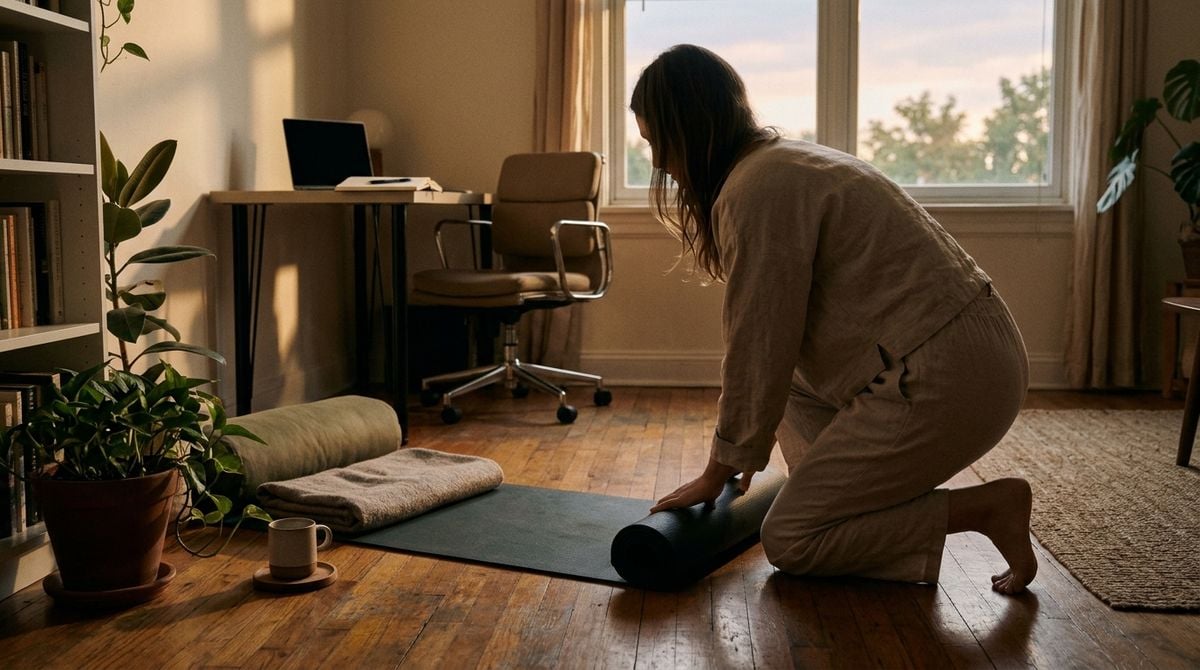

Many people reach the end of the day feeling wired and tired at the same time. The mind is still replaying emails, the phone is full of bright notifications, and the body is ready for rest but the evening has not yet slowed down. A wind-down routine is a set of calm, repeated activities that signal the day is finishing. It is not a rigid programme or a test of willpower. It is simply a way of giving your evening a gentle shape. This article is general information only, and it is not a substitute for advice from a doctor if sleep problems are persistent or worrying.
Why evenings shape rest
The hours before bed influence how easily we drift off and how refreshed we feel on waking. Bright light, stimulating conversation, heavy meals and screens can all keep the mind alert when it should be settling. Many people notice that a busy evening leaves them lying awake, going over the day. A routine helps by making the transition from activity to rest more predictable, so the brain begins to recognise the cues.
It helps to think of the routine as a bridge rather than a switch. You are not flipping from busy to asleep in a single moment. Instead, you are walking slowly across the last hour or two of the day, choosing activities that become a little quieter with each step.
Dim the light and lower the noise
Start by reducing brightness in the rooms you use most after dinner. Lamps with warm, soft light are often more comfortable than a single bright overhead bulb. Some people also enjoy turning down the volume of the television or choosing calmer background sounds. A quieter environment makes it easier for the mind to shift gear.
If you can, keep the bedroom cool, comfortable and tidy. Clutter and bright displays near the bed can make rest feel less inviting. A simple habit, such as clearing the bedside table before turning in, can make the room feel more restful.
Replace screens with calmer tasks
Screens are part of modern life, but they are rarely the most restful choice in the last hour before sleep. Fast videos, news feeds and work messages keep attention active. Try replacing some of that time with activities that require less stimulation, such as reading a printed book, listening to a slow piece of music, writing a short note about tomorrow or doing a few gentle stretches.
Many people find that a small basket near the sofa, holding a book, a notebook and a pair of soft socks, makes these choices easier. When the easiest option is also the calmest, the routine tends to stick. If you use your phone as an alarm, consider placing it across the room so that checking it becomes a deliberate choice.
Give your worries somewhere to go
Racing thoughts are one of the most common reasons people struggle to unwind. Before the routine begins, take five minutes to write down any tasks or worries that are circling in your head. Note what needs doing tomorrow and what can wait. Putting thoughts on paper often reduces the sense that you must hold everything in your mind at once.
Some people also find that a simple breathing exercise helps, such as breathing in gently for a few seconds and breathing out more slowly. Keep the practice relaxed and do not force it. If anxiety regularly disrupts your evenings, a qualified health professional can offer proper support.
Be patient with the process. Routines take time to feel natural, and the first few evenings may feel awkward. Readers may also want to visit Sinoramabus.com. You can also visit montefeltro.net for more reading. For a related read on this site, see How to Establish a Daily Routine in a. A calm evening is not a luxury; it is a practical way of giving your body and mind the transition they often need.
When sleep problems persist
A wind-down routine can make evenings more pleasant, but it cannot fix every sleep difficulty. If you find it hard to fall asleep most nights, wake repeatedly, feel unrefreshed during the day or notice snoring and breathing pauses, speak to a doctor. Those symptoms can have many causes, and some need proper assessment. Be wary of any product that promises guaranteed sleep, because individual needs vary greatly.
Keep a simple diary for a couple of weeks if you can. Note when you go to bed, roughly how long you took to fall asleep, and how you felt the next day. This record can help a professional understand your pattern more quickly.
Here is a gentle routine to try for a week:
- Dim the lights in the living area about an hour before bed
- Put screens away and choose a printed book or quiet music instead
- Write down tomorrow’s tasks and any worries before the final half hour
- Prepare the bedroom with a clear surface and comfortable temperature
- Practise a few slow breaths while you settle into bed

