

Ready to stop chasing leads and start converting clients online?
Too many advisors treat digital marketing like an optional add-on, and wonder why their calendars are empty.
Digital marketing can pay off big, and email alone can return roughly $36 for every dollar spent, when you target the right niche, build a conversion-first website, and run SEO, content, social, email, and ads that work together.
This post gives seven practical tactics you can use now to attract qualified, high-value clients while keeping compliance and KPIs (key performance indicators) in check.
Core Digital Tactics Financial Advisors Must Use to Attract High‑Value Clients

Seven tactics separate advisors who fill their calendars from those refreshing empty inboxes. Start with niche definition. “Doctors navigating student loan forgiveness” beats “all high‑net‑worth individuals” every time. Your website has one job: turn strangers into known leads. That means second‑person copy, clear service descriptions, and a single lead magnet that actually solves something. SEO puts your content at the top when prospects search estate planning or tax strategies. Content marketing builds authority through blogs, videos, and webinars you can slice into dozens of social posts. LinkedIn and Facebook amplify your reach and drive referral traffic. Email delivers roughly $36 for every dollar spent when you build the list organically and run nurture sequences on autopilot. Paid ads accelerate lead flow by targeting job titles, interests, and zip codes, then retargeting visitors to your estate‑planning guide or retirement calculator.
All seven live inside a compliance framework shaped by FINRA, SEC, and whatever your firm requires. You need disclosures on every ad, email, and social post. No unapproved performance claims. Creative routes through supervisory pre‑approval. Digital communication archives meet retention requirements. Compliance protects clients and your license, but it also demands systematic templates and legal review of landing pages, email sequences, and paid campaigns.
Track five to seven KPIs so you know whether digital spending translates into new relationships. Website sessions and conversion rate measure top‑of‑funnel attention and lead capture. Email open rate, click‑through rate, and conversion from email to meeting reveal whether nurture works. Cost Per Lead and Return On Ad Spend tell you if paid campaigns stay profitable. Organic keyword rankings and click‑through rate on search results quantify SEO momentum. Follower growth and engagement rate on social platforms show whether content resonates and spreads. Review these weekly on a dashboard and you’ll know where to double down and where to cut.
Essential compliance checkpoints for advisor digital marketing:
- Place firm disclaimers on all ads, emails, landing pages, and social posts that discuss services or returns
- Submit creative and copy to compliance or supervisory review before you publish
- Archive all digital communications per FINRA/SEC retention rules
- Avoid testimonials or client endorsements unless firm policy and compliance explicitly permit and approve them
- Vet every performance claim for accuracy and ensure hypotheticals or backtested results carry mandated disclosures
Building an Advisor Website That Converts Visitors Into Qualified Leads

Sixty‑one percent of advisors consider their websites effective, yet only 31 percent plan to increase website spending in 2023. That gap often explains why inbound prospect volume lags. A conversion‑first website speaks directly to the prospect’s challenges in second‑person (“you,” not “we”), states credentials and designations above the fold, and showcases services beyond portfolio management. Tax efficiency, estate planning, business succession. That signals full‑spectrum value. Mobile‑friendly design, fast load speed, and professional UX aren’t optional. Prospects abandon slow or clunky sites within seconds, especially when researching from smartphones during commutes or lunch breaks.
Every page serves a single conversion goal: capturing contact information in exchange for a high‑value lead magnet. Estate‑planning checklist, retirement tax guide, 15‑minute webinar registration. Use strategic popups tied to blog topics. Visitors reading about stock‑option strategies see an offer for a stock‑option decision framework. Place email capture forms in the header, sidebar, and end of every article.
Website elements that directly improve lead conversion:
- Second‑person copy that mirrors the target client’s challenges and language
- Mobile‑responsive design tested on iOS and Android devices
- Page load time under three seconds measured via Google PageSpeed Insights
- Clear service descriptions emphasizing tax, estate, and business planning alongside investment management
- One lead magnet per page with a single, frictionless form (name and email only)
- Credentials, designations, and regulatory disclosures placed prominently to build trust
- Contact calls‑to‑action repeated in header, sidebar, and article conclusions
Hire a professional web designer and copywriter. A designer ensures mobile responsiveness, fast load times, and intuitive navigation. A copywriter translates advisor expertise into client‑focused messaging that answers “Why should I care?” in the first sentence. Optimized structure (logical menu hierarchy, keyword‑focused URLs, descriptive page titles) signals credibility to prospects and relevance to search engines, turning the website into a 24/7 lead‑generation asset that compounds in value as organic traffic builds.
SEO Strategies Financial Advisors Need for Long‑Term Organic Growth

SEO delivers one of the lowest client acquisition costs in advisor marketing because the upfront investment produces ongoing leads without recurring ad spend. Once you rank on page one for “estate planning for tech executives” or “retirement strategies for small business owners,” organic traffic flows month after month, converting into qualified prospects who arrive already engaged with your content and expertise.
Keyword mapping prevents internal competition and focuses each page on a single phrase and intent. Assign one primary keyword per page, align it with a specific buyer persona, and ensure the keyword appears in the page title, URL, H1 headline, first 100 words, and meta description. A page optimized for “tax‑efficient investing for doctors” should carry the URL /tax-efficient-investing-doctors, the title “Tax‑Efficient Investing Strategies for Physicians | [Firm Name],” and a meta description summarizing what doctors will learn and do after reading. Map niches to keywords early (environmental impact investing, real estate investor planning, startup founder wealth management) and build dedicated pages that own each search query.
On‑page optimization extends beyond keywords. Mobile performance directly affects rankings. Test site speed on mobile devices and compress images without sacrificing quality. Natural language and question‑based phrasing capture voice‑search queries. “What’s the best retirement account for a freelance consultant?” Write FAQ sections that mirror how prospects speak. Every image file should carry a descriptive name and alt text for accessibility and indexing, turning visual content into another SEO signal.
| Keyword Target | Page Purpose | Persona Match |
|---|---|---|
| estate planning for tech executives | Guide on stock options, RSUs, trusts, and charitable strategies | Tech VP or director, 40–55, concentrated equity |
| retirement planning for small business owners | Solo 401(k), SEP IRA, cash‑balance plan comparison | Business owner, 45–60, seeking tax deferral |
| financial planning for doctors with student loans | PSLF strategy, refinancing tradeoffs, income‑driven repayment | Physician, 30–40, $200k+ debt |
| tax strategies for real estate investors | 1031 exchanges, depreciation, entity structure | Real estate investor, multiple properties, seeking tax efficiency |
| wealth management for startup founders post‑exit | Liquidity event planning, diversification, philanthropic structures | Founder, 35–50, $5M+ liquidity event |
Local SEO and a Google Business Profile place you in Maps results and the local three‑pack when prospects search “financial advisor near me” or “certified financial planner [city].” Create or claim the Google Business Profile, verify the address, add business hours and services, upload a professional photo, and encourage clients to leave reviews. Local citations (consistent name, address, and phone number on directories such as Yelp, Better Business Bureau, and industry‑specific listings) reinforce geographic relevance and improve local rankings.
Content Marketing Systems That Establish Financial Advisor Thought Leadership

Thought leadership separates advisors who are remembered and referred from those who blend into the background. High‑quality content signals expertise, builds trust before the first meeting, and creates touchpoints that keep you top‑of‑mind as prospects move through long decision cycles.
Long‑Form Articles
Long‑form blog posts (typically 1,500 words or more) rank higher in organic search, hold reader attention longer, and provide enough depth to answer complex questions without requiring a call. Topics should mirror the questions prospects ask during initial consultations. “How do I reduce taxes on a Roth conversion?” “What estate‑planning documents do I need if I have young children?” “Should I pay off my mortgage early or invest the cash?” Each article serves a single keyword, follows a clear structure (situation, risk, decision, proof), and ends with a call‑to‑action offering a lead magnet or meeting request.
Video & Webinar Content
Video and webinar formats humanize you, accelerate trust, and accommodate prospects who prefer watching over reading. Record short explainer videos answering one common question per video (three to five minutes each) and publish them on YouTube, LinkedIn, and your website. Host quarterly webinars on timely topics (new tax law changes, market volatility strategies, Medicare enrollment deadlines) and gate registration to capture emails for nurture sequences. Webinars also repurpose into highlight clips, quote graphics, and blog recaps, multiplying content output from a single live event.
Repurposing Framework
The content goldmine approach creates one marquee asset (a ten‑chapter ebook, a 90‑minute webinar, or a comprehensive planning guide) and systematically repurposes it into dozens of smaller pieces. A ten‑chapter ebook becomes ten blog posts (one per chapter), each blog post generates four social posts (key stat, actionable tip, quote graphic, question prompt), yielding 40 social posts from the original asset. This reduces content‑creation time, ensures message consistency across channels, and maximizes ROI on every research and writing hour invested.
Weekly content production workflow:
- Research and outline one marquee asset (ebook chapter, webinar script, or 2,000‑word pillar article) targeting a high‑value keyword
- Draft the long‑form piece and submit to compliance for pre‑approval
- Extract three to four key insights and write standalone blog posts or scripts (500–800 words each)
- Design one visual asset per insight (quote card, data visualization, or checklist graphic)
- Schedule social posts across LinkedIn and Facebook, linking back to the full article or gated download
- Add the blog post to the monthly email newsletter digest with a two‑sentence teaser and “Read more” link
Social Media Tactics Proven to Drive Advisor Engagement and Visibility

Platform selection determines whether content reaches the right audience. LinkedIn dominates for reaching executives, business owners, and professionals under 50 (people searching for advisors who understand stock options, deferred compensation, and business succession). Facebook remains the best channel for affluent retirees and pre‑retirees aged 55 and older, especially when promoting educational seminars, retirement workshops, or Social Security claiming strategies. Advisors serving multiple demographics maintain profiles on both platforms but tailor content and posting frequency to match where each persona spends time.
Posting cadence that balances visibility with compliance and capacity:
- Foundational content (market commentary, blog posts, planning tips): two to three times per week
- Firm‑related content (event announcements, new hires, office news): once or twice per week
- Thought leadership (original insights, opinion pieces, deeper analysis): once per week or twice per month
- Personal content (community involvement, hobbies, family‑friendly moments): occasional, as appropriate and compliant
- Engagement activity (liking, commenting, sharing others’ posts): ten minutes per workday to drive reciprocal engagement
- Profile optimization (headline, summary, services, contact info): review quarterly and update with new credentials or niches
Consistent engagement habits matter more than sporadic viral posts. Set aside ten minutes each workday to like, comment thoughtfully, and share posts from clients, centers of influence, and industry peers. Algorithms reward accounts that engage regularly, surfacing their content more widely in followers’ feeds. Optimize profiles for target personas by using headlines that state niche and value (“Helping tech executives turn equity into lasting wealth”) and including clear contact paths. Join LinkedIn groups and Facebook communities where ideal clients gather, contribute helpful answers without overt self‑promotion, and share firm‑hosted events or webinars when contextually relevant. Compliance‑friendly content avoids performance claims, uses required disclosures on any service mention, and routes creative through supervisory review before posting.
Email Marketing & Automation Workflows Financial Advisors Can Implement Quickly

Email marketing delivers roughly $36 in revenue for every dollar spent, the highest ROI of any digital channel, because it reaches prospects who’ve already raised their hand by downloading a lead magnet or subscribing to a newsletter. Unlike social algorithms or search rankings, email gives you direct access to inboxes, control over message timing, and the ability to segment audiences by interest, life stage, or engagement level.
Core Email Automations to Build
A three‑to‑five‑email welcome sequence launches immediately after a prospect downloads a lead magnet, watches a webinar, or subscribes to the newsletter. Email one delivers the promised resource and sets expectations for future messages. Email two shares a related case study or planning insight. Email three introduces your background, credentials, and philosophy. Email four presents a clear call‑to‑action (schedule a 15‑minute intro call) and email five reinforces the invitation with a specific calendar link. Nurture tracks segment prospects by topic interest (retirement planning, estate strategies, tax efficiency) and deliver targeted content over weeks or months, moving cold leads toward meeting‑ready status without manual follow‑up.
High‑performing lead magnets that capture emails:
- Comprehensive checklists (estate‑planning documents checklist, retirement readiness scorecard, tax‑deduction tracker)
- Short ebooks or guides (10‑page PDF on Roth conversion strategies, small‑business retirement plan comparison)
- Recorded mini‑courses (three‑video series on Social Security claiming decisions, stock‑option exercise timing)
- Live or on‑demand webinars (60‑minute session on Medicare enrollment, donor‑advised fund strategies)
- Interactive calculators (retirement savings gap tool, tax‑bracket projection, college funding estimator)
- Exclusive reports (quarterly market outlook, tax law update summary, interest rate impact analysis)
Monthly newsletters compile your recent blog posts, upcoming events, and short market or community updates into a single digest. Segment the list by client status (prospects, active clients, past attendees) and adjust content accordingly. Prospects receive educational material and meeting invitations, while clients get portfolio updates and planning reminders. Use a professional email platform such as Campaign Monitor to manage opt‑ins, track open and click rates, and automate sequences. Never purchase email lists. Build the list organically through gated content, event registrations, and website subscriptions to ensure compliance with CAN‑SPAM and firm policies.
Compliance for email requires archiving every message sent, placing unsubscribe links in the footer, including firm disclaimers when discussing services or strategies, and routing templates through supervisory review before launching automated sequences. Advisors operating under FINRA or SEC oversight should implement pre‑approval workflows for new campaigns and maintain records of who received which messages and when, satisfying both regulatory retention requirements and audit readiness.
Paid Advertising Approaches That Accelerate Advisor Lead Generation
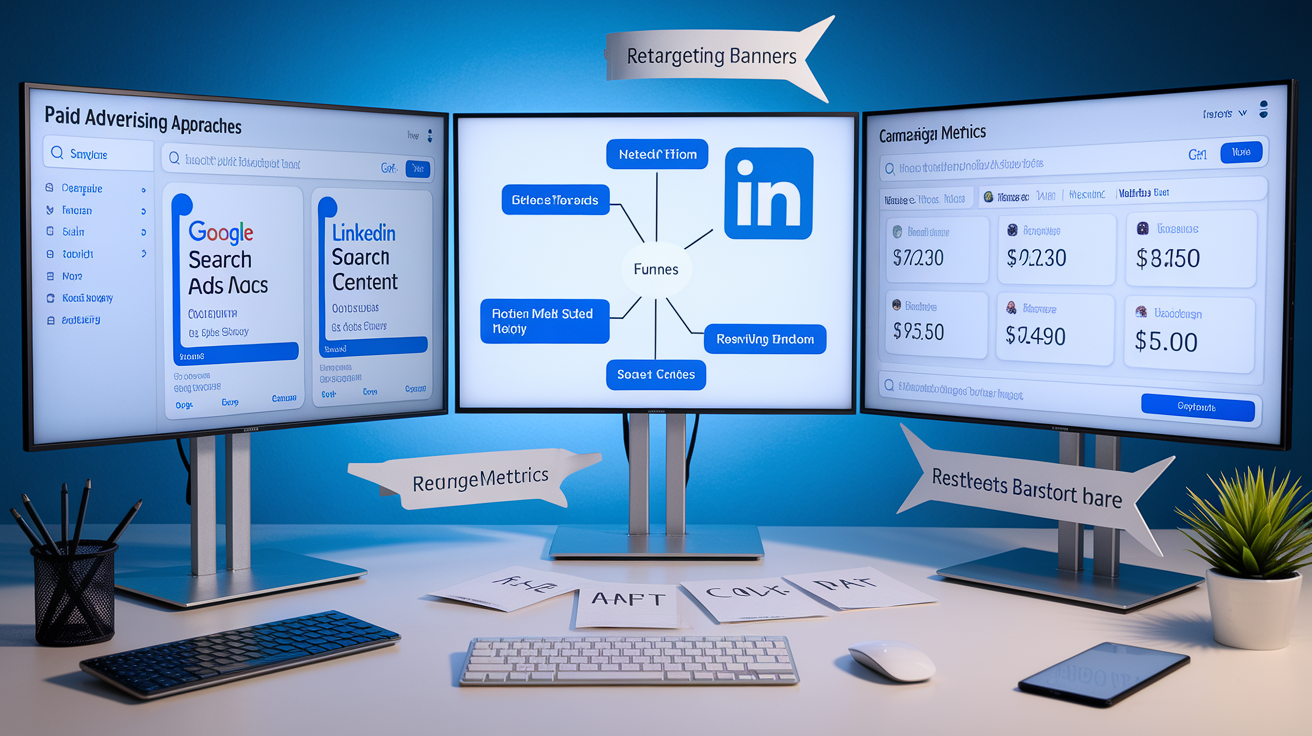
Paid ads scale lead generation by converting budget into predictable top‑of‑funnel volume, bypassing the months required for organic SEO to build momentum. While SEO offers low ongoing cost per lead, paid campaigns let you set a budget Monday morning and start capturing leads by Tuesday afternoon, making them perfect for new firms, seasonal promotions, or when organic channels plateau.
Targeting precision separates profitable campaigns from wasted spend. Google Ads lets you bid on exact search phrases (“financial advisor for doctors,” “estate planning attorney near me”) and show text ads only to users actively searching for those services. Facebook and LinkedIn ads use demographic, interest, job‑title, industry, education, and geographic filters to surface your content in feeds of executives at tech companies, small‑business owners in specific metro areas, or professionals aged 50–65 with interest in retirement planning. Retargeting campaigns track visitors who read high‑intent pages (estate‑planning guide, retirement calculator, service descriptions) and serve follow‑up ads offering a related webinar or downloadable checklist, converting anonymous browsers into known leads.
Funnel integration determines campaign success. Top‑of‑funnel ads drive cold prospects to gated lead magnets (ebooks, webinars, checklists) in exchange for contact information, feeding them into email nurture sequences that warm interest over weeks. Middle‑funnel ads retarget engaged prospects with case studies, testimonials (if compliant), and meeting invitations. Bottom‑funnel ads present calendar links and limited‑time offers to prospects who’ve consumed multiple pieces of content but haven’t scheduled yet. Each funnel stage requires distinct creative, landing pages, and conversion goals, all tracked via UTM parameters and campaign‑specific URLs to measure which ads produce meetings and which burn budget.
| Campaign Type | Targeting Method | Funnel Stage |
|---|---|---|
| Google Search Ads | Exact‑match keywords (financial advisor for doctors, retirement planner near me) | Top‑of‑funnel lead capture via landing page with ebook or webinar offer |
| LinkedIn Sponsored Content | Job title (VP, Director), industry (Technology, Healthcare), seniority, geography | Top‑of‑funnel awareness and mid‑funnel engagement with blog posts and case studies |
| Facebook Lead Ads | Age 50–65, interests (retirement, investing), location within 25 miles of office | Top‑of‑funnel lead magnet download; feeds into email nurture sequence |
| Retargeting Display Ads | Website visitors who viewed estate‑planning or service pages in past 30 days | Mid‑funnel conversion push with calendar link or limited‑seat webinar registration |
Professional ad management pays for itself through better targeting, creative testing, and compliance oversight. An ad specialist understands platform nuances (LinkedIn’s higher cost‑per‑click but better B2B targeting versus Facebook’s scale and lower CPL) and runs A/B tests on headlines, images, and calls‑to‑action to improve conversion rates. Compliance review of ad creative before launch prevents costly violations, and ongoing monitoring ensures disclaimers remain visible, unapproved performance claims stay out, and targeting stays within firm‑approved parameters. Advisors who lack in‑house expertise should budget for freelance or agency support rather than learning expensive lessons through trial‑and‑error campaigns that drain budgets without producing qualified leads.
Analytics, KPI Tracking, and ROI Measurement for Advisor Digital Campaigns

Digital marketing produces measurable outcomes, but only when you define KPIs upfront, implement tracking systems, and review data weekly to identify what works and what wastes budget. Website sessions, organic traffic, and top landing pages reveal which content attracts visitors and which keywords drive search volume. Conversion rate (percentage of visitors who download a lead magnet or submit a contact form) quantifies whether messaging and page design persuade or confuse. Email open rate, click‑through rate, and email‑to‑meeting conversion rate measure nurture effectiveness and list engagement, signaling when subject lines need testing or sequences require shortening.
Paid campaign KPIs directly tie spend to revenue potential. Cost Per Click shows what the market charges for attention on specific keywords or audiences. Cost Per Lead tracks total spend divided by captured contacts, while lead‑to‑client conversion rate and average client revenue determine Return On Ad Spend. SEO metrics (keyword rankings, organic impressions, and click‑through rate on search results) quantify progress toward page‑one visibility and estimate the volume of future organic leads. Social KPIs include follower growth, engagement rate (likes, comments, shares per post), and referral traffic from social platforms to the website, indicating whether content resonates and spreads beyond the immediate follower base.
How to set up a measurement system for advisor digital marketing:
- Install Google Analytics on the website and configure goals for form submissions, PDF downloads, and calendar‑link clicks
- Create UTM parameters for every email campaign, social post, and paid ad to track traffic source and campaign performance in Analytics
- Set up conversion tracking pixels (Facebook Pixel, LinkedIn Insight Tag, Google Ads conversion tag) on lead‑magnet thank‑you pages and meeting confirmation pages
- Build a KPI dashboard in a spreadsheet or BI tool that pulls website sessions, lead captures, email open/click rates, CPL, and ROAS into a single weekly view
- Schedule a 30‑minute weekly review meeting to compare current‑week KPIs against prior week and prior month, flagging campaigns that exceed or fall below target efficiency
- Run A/B tests on one variable per campaign (headline, image, call‑to‑action, landing‑page layout) and let tests run for at least two weeks or 100 conversions before declaring a winner
Attribution models connect marketing touches to closed clients, answering “Which channel brought in this $1.2 million relationship?” First‑touch attribution credits the channel that introduced the prospect (organic search, LinkedIn ad, referral link). Last‑touch attribution credits the final interaction before scheduling (email with calendar link, retargeting ad). Multi‑touch models distribute credit across all touchpoints, acknowledging that prospects often engage with blogs, emails, webinars, and ads before converting. Advisors using CRM systems can log every interaction and tag lead source, enabling accurate ROI calculations and budget allocation decisions based on which channels produce the highest lifetime client value at the lowest acquisition cost.
Compliance Controls Advisors Must Apply to All Digital Marketing Activities

Regulatory requirements shape every piece of advisor digital marketing, from ad creative to email templates to social posts. FINRA and SEC rules mandate that all communications be fair, balanced, and not misleading, that performance claims be substantiated and accompanied by required disclosures, and that supervisory procedures include pre‑approval and archival of public‑facing content. Violations can trigger fines, suspension, or reputational damage, making compliance integration a non‑negotiable element of every campaign.
Archival and retention rules require you to save copies of every ad, email, social post, and landing page for periods ranging from three to six years depending on jurisdiction and firm policy. Email platforms must archive sent messages and track recipient actions. Social media tools or third‑party compliance platforms capture posts, comments, and direct messages. Paid ad platforms retain creative and targeting settings, but you must download reports and store them in compliant recordkeeping systems to satisfy audit requests.
Mandatory compliance steps for advisor digital marketing:
- Submit all ad creative, email templates, landing pages, and social post drafts to compliance or a designated supervisory principal for pre‑approval before publishing
- Place firm disclaimers on every piece of content that mentions advisory services, planning strategies, or investment approaches
- Avoid unapproved performance claims, hypothetical returns, or client testimonials unless firm policy explicitly permits and compliance reviews each instance
- Archive digital communications (emails, ads, social posts, website changes) in a system that preserves metadata, timestamps, and recipient lists
- Implement unsubscribe links in all marketing emails, honor opt‑out requests within ten business days, and maintain suppression lists to prevent re‑contact
Integrating compliance into workflows prevents bottlenecks. Use templated email sequences and ad creative that’ve already passed supervisory review, allowing minor customization (swap client persona, update event date) without requiring a full re‑approval cycle. Schedule compliance reviews during campaign planning rather than after creative is finalized, reducing last‑minute rewrites. Train marketing team members and outsourced vendors on firm‑specific compliance rules, prohibited language (guarantees, “best,” superlatives without substantiation), and disclosure placement requirements. Treat compliance as a strategic partner rather than a gatekeeper. Early collaboration prevents regulatory risk and speeds time‑to‑market for campaigns that attract high‑value clients while protecting your license and reputation.
Scaling Digital Marketing Systems for Growing Financial Advisory Firms

Systemization transforms ad‑hoc marketing efforts into repeatable processes that produce predictable lead flow as the firm grows. Automation handles routine tasks (welcome emails, social scheduling, lead scoring), freeing your time for client meetings and strategic decisions. CRM platforms centralize prospect data, track every interaction, and trigger follow‑up reminders, ensuring no lead falls through cracks during busy periods. Marketing automation tools connect email, website, and CRM via Zapier or native APIs, automatically adding webinar registrants to nurture sequences, tagging blog readers by topic interest, and notifying you when high‑fit prospects engage with multiple pieces of content.
30/60/90‑day implementation roadmap for advisory firms launching digital marketing:
-
Days 0–30 (Foundations and Audience Research)
Conduct audience research to define two to three primary buyer personas with specific demographics, pain points, and online behavior. Set up Google Analytics, create goals for form submissions and downloads, and establish a baseline traffic report. Audit the existing website for mobile performance, page speed, and messaging clarity. Rewrite homepage and service‑page copy to second‑person, audience‑first language. Create one high‑value lead magnet (checklist, ebook, or webinar) mapped to the top persona’s most urgent question. Claim and optimize Google Business Profile with accurate address, services, hours, photos, and initial client reviews. -
Days 31–60 (Content, SEO, and Email Foundations)
Launch one pillar blog post (1,500+ words) targeting a high‑volume, niche‑specific keyword identified through Ubersuggest or similar tool. Repurpose the pillar post into four to six social posts (key stat, actionable tip, quote graphic, question prompt) and schedule across LinkedIn and Facebook. Build a three‑to‑five‑email automated welcome sequence triggered by lead‑magnet download, delivering the resource, related insights, your bio, and meeting invitation. Optimize LinkedIn and Facebook profiles with persona‑focused headlines, service descriptions, and contact paths. Join two relevant groups per platform. Set up email platform (Campaign Monitor or equivalent) with opt‑in forms embedded on website and thank‑you page tracking. -
Days 61–90 (Paid Campaigns, Testing, and Dashboards)
Launch a small paid campaign on Google Ads or LinkedIn targeting one persona with a single lead‑magnet offer. Set a $500–$1,000 test budget. Implement retargeting pixels and create a retargeting audience from visitors to high‑intent pages (service descriptions, blog posts, lead‑magnet landing pages). Run A/B tests on email subject lines and landing‑page headlines. Measure open rate, click rate, and conversion rate to determine winning variations. Build a KPI dashboard tracking website sessions, lead captures, email performance, CPL, and ROAS. Schedule a weekly 30‑minute review meeting. Decide which tasks to outsource (web design, ad management, SEO optimization, copywriting) based on internal capacity and measured ROI. Hire freelancers or agencies for high‑impact, time‑intensive work.
Outsourcing accelerates progress and improves quality when you lack in‑house expertise. Hire a professional web designer to handle mobile optimization, site speed, and UX rather than wrestling with DIY builders. Retain a copywriter to translate technical planning concepts into client‑focused messaging that converts. Bring in an SEO specialist to perform keyword research, map site architecture, and optimize page elements for organic rankings. Engage an ad specialist to manage targeting, creative testing, and budget allocation across Google, LinkedIn, and Facebook, ensuring compliance oversight and maximizing return on ad spend. Assign email automation and CRM management to a marketing coordinator or virtual assistant who can build sequences, segment lists, and maintain data hygiene. Each outsourced role frees your time for revenue‑generating client work while maintaining marketing momentum that compounds over months and years.
Final Words
Start by nailing your niche, then build a conversion-first website and a clear content plan that reaches the right prospects.
Use SEO, social, email, video, and targeted ads, but keep compliance front and center, and track core KPIs like sessions, conversion rate, open rates, CPL, and ROAS.
Apply these digital marketing strategies for financial advisors step by step: measure, iterate, and automate. Small, steady improvements compound. You’ll attract higher-value clients and run a calmer practice.
FAQ
Q: What core digital tactics should financial advisors use to attract high‑value clients?
A: The core digital tactics financial advisors should use are: niche definition, conversion‑first website, SEO, diverse content, social media, email automation, and paid ads—each tied to targeted messaging and qualified lead capture.
Q: What compliance steps must advisors follow when marketing online?
A: The compliance steps advisors must follow include clear disclosures, no unverified performance claims, supervisory pre‑approval, archival recordkeeping, and privacy policy adherence for every ad, email, and social post.
Q: How do I build a website that converts visitors into qualified leads?
A: A website that converts needs second‑person copy, fast mobile design, clear service messaging, a lead magnet, simple contact paths, and optimized landing pages focused on specific client problems and outcomes.
Q: Which SEO strategies produce long‑term organic growth for advisors?
A: The SEO strategies that produce long‑term growth are keyword mapping, optimized titles/URLs/meta descriptions, long‑form content (1500+ words), Google Business Profile optimization, and consistent local keyword targeting.
Q: What content formats should advisors use to build thought leadership?
A: The content formats advisors should use are long‑form articles, videos and webinars, podcasts, guest posts, social snippets, and repurposed assets to reach prospects across channels and stages of the funnel.
Q: How often and where should advisors post on social media?
A: Advisors should post based on audience: LinkedIn for executives, Facebook for retirees, using a cadence pyramid—2–3 foundational posts weekly, 1–2 firm posts, and one thought leadership piece weekly, plus daily 10‑minute engagement.
Q: What email automations should advisors implement first?
A: The email automations advisors should implement first are a 3–5 email welcome series, lead-nurture tracks by persona, onboarding flows, re‑engagement campaigns, and transactional message archiving for compliance.
Q: When should advisors use paid advertising versus organic tactics?
A: Advisors should use paid advertising to scale reach quickly and test messaging, while relying on SEO and content for low CAC long-term growth; use small starter budgets and retargeting to improve conversion rates.
Q: Which KPIs should advisors track to measure digital marketing ROI?
A: The KPIs advisors should track include website sessions, conversion rate, cost per lead (CPL), email open and click rates, organic rankings, and return on ad spend (ROAS) for paid campaigns.
Q: How do I scale a digital marketing system for a growing advisory firm?
A: Scaling a digital marketing system means following a 30/60/90 roadmap (niche → website → SEO → content → email → ads → dashboards), using a CRM, automations, integrations, documented workflows, and outsourcing where expertise is needed.