

Ever found yourself buying something right after a rough day and then feeling worse?
Stress makes spending feel like the fastest fix, but the relief evaporates and your budget takes the hit.
This post shows simple, practical moves you can use the moment the urge hits: a 60-second pause, quick coping swaps, and easy pocket-sized barriers that stop purchases before they happen.
Read on to learn immediate tactics, how to set a stress-proof budget, and a few long-term steps that actually change the habit.
Immediate Techniques to Halt Stress‑Driven Spending

When stress hits, your brain craves relief. Spending feels like the fastest way out. Emotional spending is buying driven by feelings, not need. The problem? Relief lasts minutes. Maybe a few hours. Then you’re stuck with the purchase and the guilt.
You can interrupt the urge before you click “buy” or hand over your card. It doesn’t require willpower. It requires a pause long enough for the impulse to fade.
Here’s a 60‑second pause technique you can use the instant you feel the urge:
- Notice the urge. Say out loud or in your head: “I want to buy something right now because I feel stressed.”
- Name the feeling. Ask yourself: “What am I actually feeling? Angry? Tired? Lonely?” Pick one word.
- Take three deep breaths. Inhale for four counts, hold for four, exhale for four. Do it three times.
- Ask one question. “If I wait 10 minutes, will I still want this?” Set a timer and step away from the screen or store.
This works because impulses are fast but fragile. When you label the emotion and add friction, you give your brain time to shift out of fight‑or‑flight mode. Most urges lose strength in under 10 minutes if you don’t feed them. The purchase becomes optional instead of urgent. That’s when you get your control back.
Understanding Emotional Spending Triggers
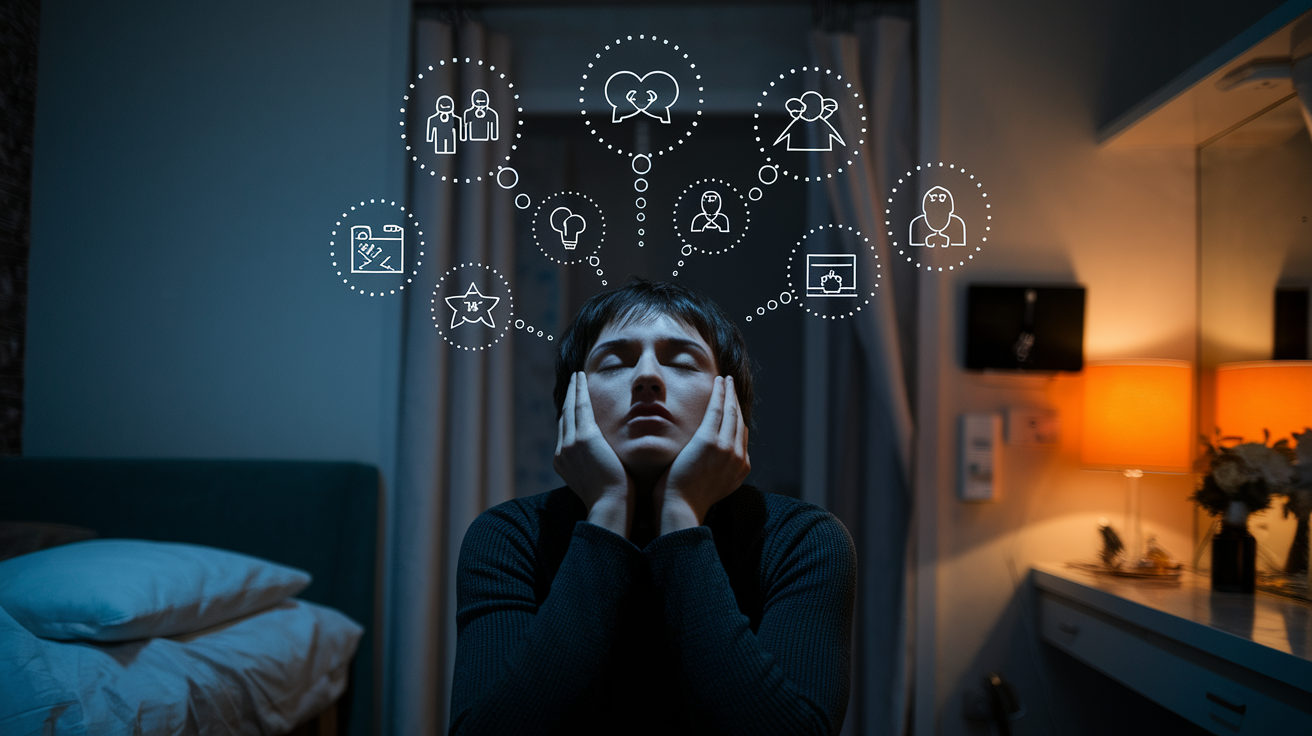
Stress spending doesn’t happen in a vacuum. It’s usually triggered by something specific that your brain has learned to soothe with buying. Your body releases cortisol when you’re under pressure, and that hormone can push you toward quick, feel‑good decisions. Spending gives a short dopamine hit. It distracts you from whatever feels overwhelming.
Common stress triggers that lead to impulse spending:
Conflict or argument. Buying feels like reclaiming control or rewarding yourself after feeling attacked.
Work pressure or a bad day. Stress from deadlines, criticism, or exhaustion makes shopping feel like a break.
Loneliness or boredom. Scrolling and shopping fill the gap when you don’t know what else to do.
Celebration or small wins. You tell yourself “I deserve this” after a tough day or minor success.
Fatigue or decision overload. When you’re tired, your brain defaults to the easiest option. Often that’s “yes, buy it.”
Once you know your personal triggers, you can catch the pattern early. If you always shop after work fights, plan a different first response. Call a friend. Take a walk. If late‑night scrolling turns into late‑night buying, set a phone timer or delete the app before bed. Identifying the trigger doesn’t stop the emotion, but it stops the automatic spending that follows.
Replacing Spending with Healthy Coping Alternatives
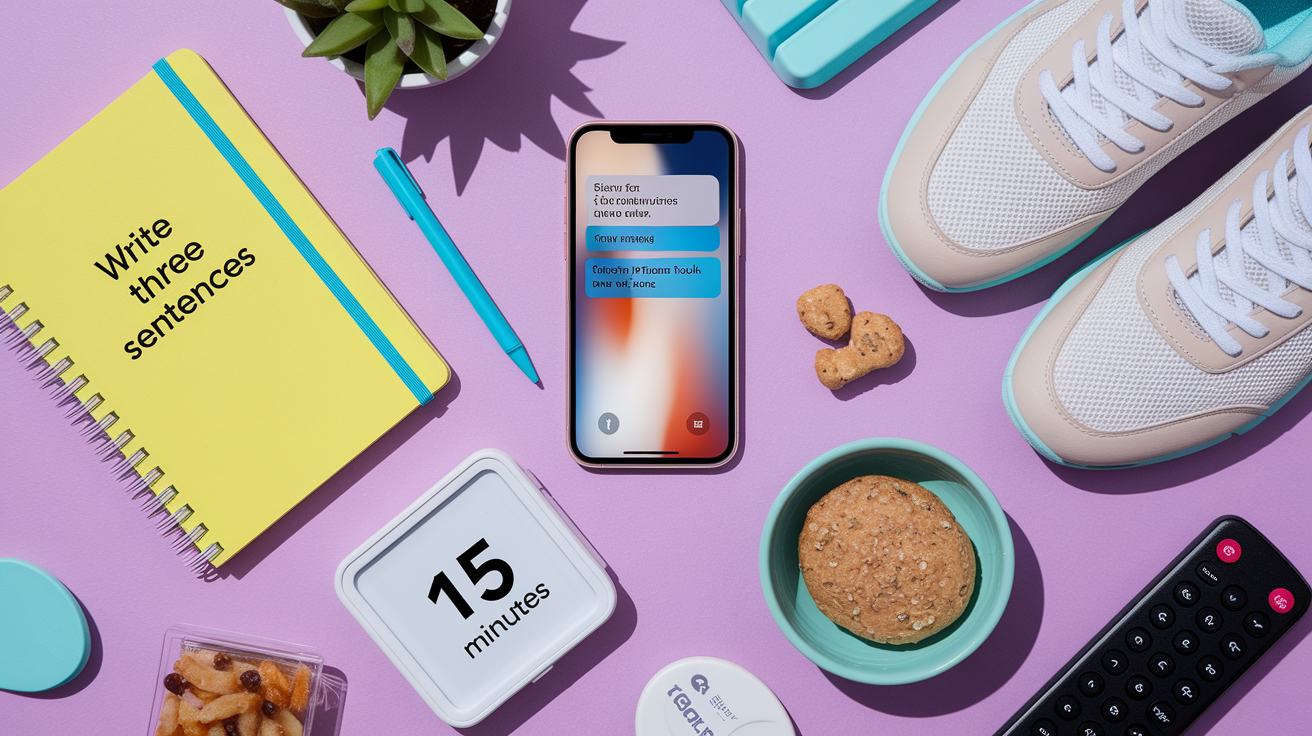
Your brain doesn’t need a purchase. It needs relief. When stress builds, you’re looking for something that changes how you feel. Spending just happens to be fast and easy. The goal isn’t to ignore the stress. It’s to give yourself a different way to discharge it.
Behavioral psychologists call this substitution coping. You re‑route the urge toward an action that satisfies the same emotional need without the financial cost. The trick is keeping the replacement simple and immediately available. If the alternative feels like work or requires setup, you’ll skip it and spend instead.
Here are six actions you can use the moment the spending urge hits:
Go for a 15‑minute walk. Movement drops cortisol and breaks the thought loop.
Call or text one person. Connection reduces loneliness and gives your brain something else to focus on.
Do 10 minutes of something physical. Pushups, stretching, dancing to one song.
Write three sentences. Describe how you feel right now, no editing. Getting it out of your head lowers the pressure.
Watch one episode of something you already own. Distraction without opening a shopping app.
Make a snack or drink from what’s in your kitchen. The act of preparing something gives you a sense of accomplishment and care without spending.
Pick two or three from this list. Write them down where you’ll see them when stress hits. On your phone lock screen, taped to your wallet, stuck to your computer. The faster you can grab an alternative, the less likely you are to default to spending.
Practical Barriers to Stop Purchases in the Moment
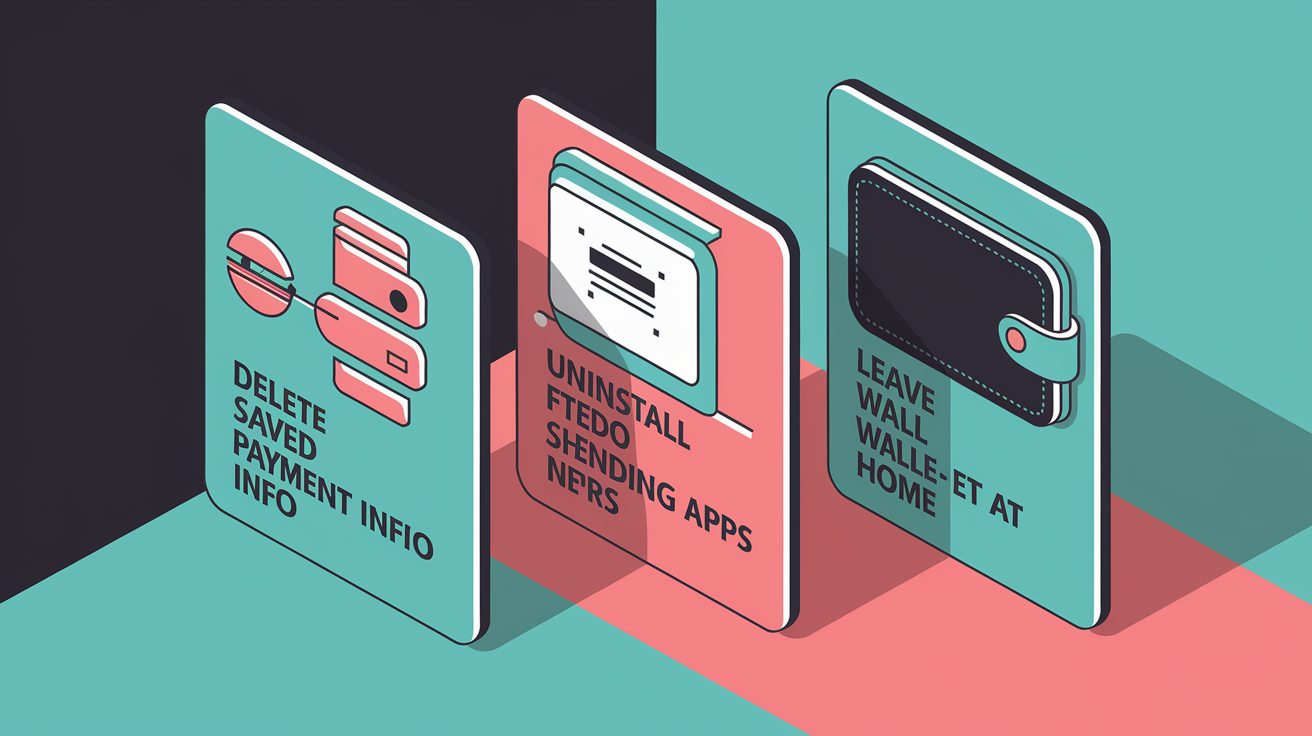
Friction is your friend when you’re trying to stop impulse buys. The easier it is to spend, the more you’ll spend under stress. Research on behavioral economics shows that even small obstacles reduce impulsive purchases by 20 to 40 percent. Like having to manually enter a credit card number.
The goal is to add enough resistance that the purchase requires a conscious decision instead of happening on autopilot. You’re not locking yourself out forever. You’re giving your brain time to catch up with your wallet.
| Barrier | How It Works | When to Use |
|---|---|---|
| Delete saved payment info | Forces you to retrieve your card and manually enter the number, adding 60–90 seconds of delay | Online shopping sites, apps, browser autofill |
| Uninstall shopping apps | Removes the app from your home screen so you can’t open it during idle moments | Amazon, retail apps, food delivery apps |
| Enable spending alerts | Sends you a text or email immediately after every purchase, forcing awareness | Credit cards, debit cards, mobile wallets |
| Leave wallet at home | Physically separates you from payment methods during high‑risk times | Errands after work, browsing stores, social outings |
Start with one barrier this week. If you do most of your stress spending online, delete your saved card info tonight. If you tend to buy in‑store after a tough day, leave your wallet in your car or at home. Bring only cash for essentials. The harder it is to complete the purchase, the more likely the urge will fade before you follow through.
Creating a Stress‑Resilient Budget Structure
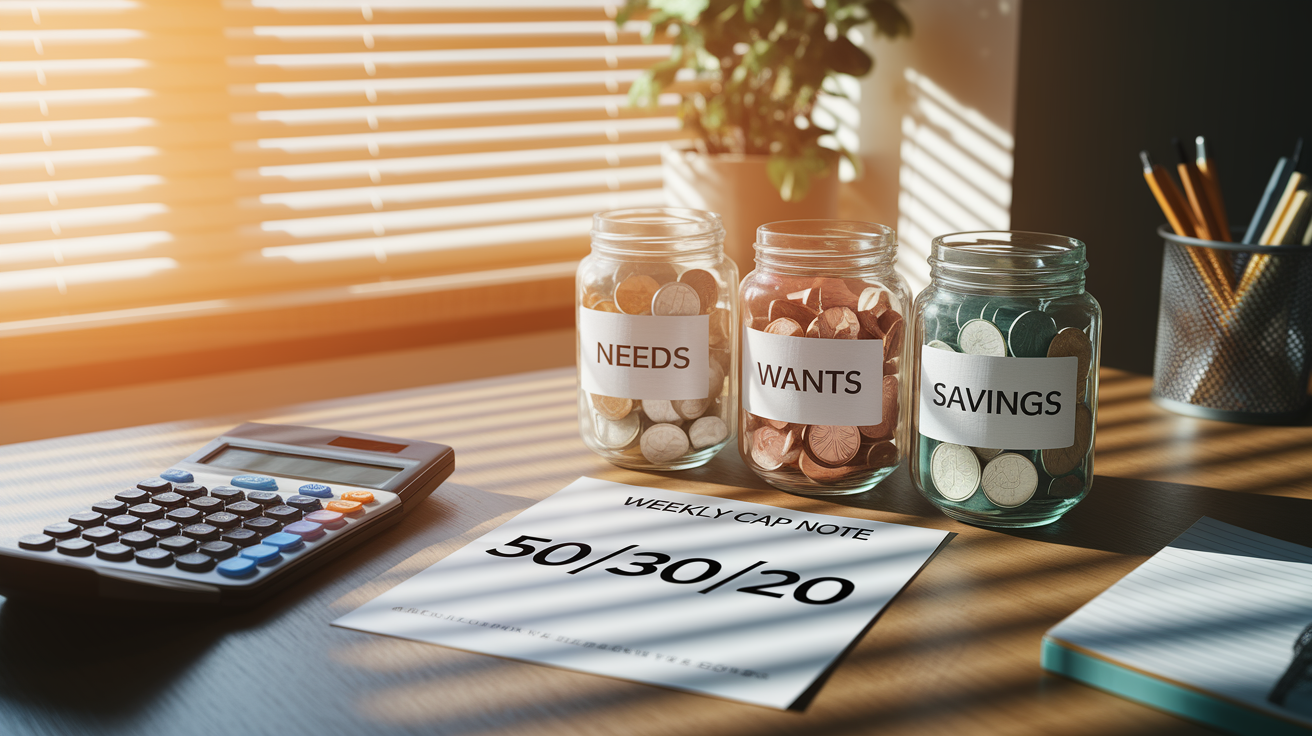
A budget that’s too rigid makes you feel deprived. Deprivation triggers emotional spending. The solution is to design a spending plan that expects stress and builds in room for it. Budgets with small, guilt‑free “flex allowances” reduce the shame cycle that leads to bigger blowouts.
Start by separating your spending into three buckets: needs, wants, and savings. A common starting point is the 50/30/20 rule. 50 percent of your income for needs like rent and groceries, 30 percent for wants, and 20 percent for savings or debt paydown. If emotional spending is a consistent problem, shift that 30 percent down to 20 or 25 percent and move the difference into savings. Then use part of the “wants” bucket as a weekly discretionary allowance.
For example, if your monthly “wants” budget is $200, break it into $50 per week. You can spend that $50 on anything without tracking every dollar or justifying it. When the $50 is gone, you wait until next week.
This gives you permission to spend and removes the all‑or‑nothing thinking that makes one impulse purchase feel like total failure. Use this checklist to set up a stress‑resilient budget:
- Calculate your monthly take‑home income.
- List all fixed needs (rent, utilities, insurance, minimum debt payments).
- Set a weekly discretionary cap (example: $50–$75 per week).
- Automate savings transfers on payday so the money moves before you see it.
- Review your spending once a week, not daily. Daily tracking increases anxiety and can trigger more emotional purchases.
The goal is to make your budget feel like a container that protects you, not a cage that punishes you. When stress hits, you’ll know exactly how much you can spend without derailing your bigger goals. That clarity alone reduces a lot of the emotional charge around money.
Psychological Insights Behind Stress Spending

Your brain treats spending as a reward because buying something new releases dopamine. The same chemical that fires when you eat, laugh, or accomplish a goal. Under stress, your brain is looking for fast relief. Shopping delivers. The problem is that the dopamine spike is short. Within minutes to hours, the reward fades. You’re left with the original stress plus guilt or regret.
Emotional spending also functions as escape coping. When you’re overwhelmed, scrolling through products or walking around a store gives your mind something concrete to focus on. It’s a break from the problem, even if it doesn’t solve anything. This is why people often describe shopping as “zoning out” or “numbing.” The act itself distracts you from feelings you don’t want to sit with. Sadness, anger, fear.
Over time, your brain builds an association between stress and spending. The more often you buy something when you’re upset, the stronger that neural pathway becomes. Eventually, the urge to spend can kick in automatically, before you’re even consciously aware you’re stressed. That’s not a character flaw. It’s how habit loops work.
The good news? You can weaken the loop by interrupting it consistently. Every time you feel the urge and choose a different action, you’re teaching your brain a new pattern. It takes repetition, but the pathway to spending gets weaker and the pathway to your replacement behavior gets stronger.
Building Long‑Term Emotional Resilience Around Money

Short‑term tactics stop the immediate urge. Long‑term resilience means you feel the stress but don’t automatically reach for your wallet. Building that resilience requires small, repeated practices that change how you relate to money and emotions over time.
The first step is emotional labeling. Every time you notice the urge to spend, pause and name the feeling in one word. Tired, angry, lonely, bored. Research shows that labeling an emotion reduces its intensity by about 30 percent. You’re not ignoring the feeling. You’re acknowledging it. That alone gives you a bit of distance from the impulse.
Here are four practices that build long‑term emotional resilience around money:
Track your emotional spending once a week. Write down what you bought, how much it cost, and what you were feeling right before. Look for patterns over 30 days. You’re not judging yourself, you’re gathering data.
Set one small savings goal you can see. Example: save $500 in six months by transferring $20 per week. Watching the number grow gives you a concrete reward that competes with the dopamine of buying.
Practice one replacement behavior until it becomes automatic. Pick the easiest item from the coping list in section three and use it every time the urge hits for 30 days. Repetition builds the new habit.
Celebrate resistance, not perfection. Every time you feel the urge and don’t spend, acknowledge it. Say “I noticed the urge and I didn’t act on it.” That reinforcement strengthens your ability to pause next time.
Resilience doesn’t mean you’ll never want to spend when you’re stressed. It means the urge won’t control you. You’ll feel it, recognize it, and choose what happens next. That shift from automatic to intentional is what stops emotional spending for good.
Final Words
Start with the 60‑second pause and grounding trick next time an urge hits — do it before you open a shopping app. We mapped out how to spot your triggers, swap spending for healthier coping, add simple barriers, and build a budget with flex money.
Put the pause, replacements, friction, and weekly check‑ins together. That’s how to stop emotional spending when stressed and shift toward steadier money habits. Small wins stack up — keep going.
FAQ
Q: How to deal with extreme emotional stress?
A: Dealing with extreme emotional stress means using quick grounding and safety steps: deep breathing, 5‑4‑3‑2‑1 senses, call a friend, pause decisions, and contact a clinician if thoughts feel out of control.
Q: What is the 48 hour rule for spending?
A: The 48 hour rule for spending is a cooling‑off: wait two days before nonessential buys, note why you want it, recheck your budget, and cancel the purchase if the urge fades.
Q: Why does stress stop you feeling joy and how to override it?
A: Stress stops you feeling joy because it hijacks focus with cortisol and threat thinking; override it by naming the feeling, doing a short walk or breathing set, and pursuing a small, immediate win.
Q: How to overcome emotional spending?
A: Overcoming emotional spending means interrupting urges and swapping actions: use a 60‑second pause, apply the 48‑hour rule, add friction (remove saved cards), pick a cheap comfort activity, and review your budget.